Why Regular Tree Maintenance Saves Homeowners Money in the Long Run
Living in Northeast Ohio means our trees face some of the most volatile weather in the country. From Lake Erie “Screamer” winds to heavy April snows that weigh down early spring buds, the trees in your Streetsboro yard are under constant environmental stress. But how do you know when a tree has moved from “struggling” to “dangerous”?
Understanding the signs of tree failure isn’t just about botany; it’s about protecting your home, your family, and your liability as a property owner. Identifying a hazard before the next storm hits can mean the difference between a controlled pruning and a catastrophic insurance claim.
The Streetsboro “Failure Profile”: Why our trees are unique
In Portage County, we deal with specific geological and climatic factors that contribute to tree instability. A tree that is safe in the sandy soils of a coastal town might be a “faller” in the heavy clay of Streetsboro.
1. Clay-heavy soil and root stability
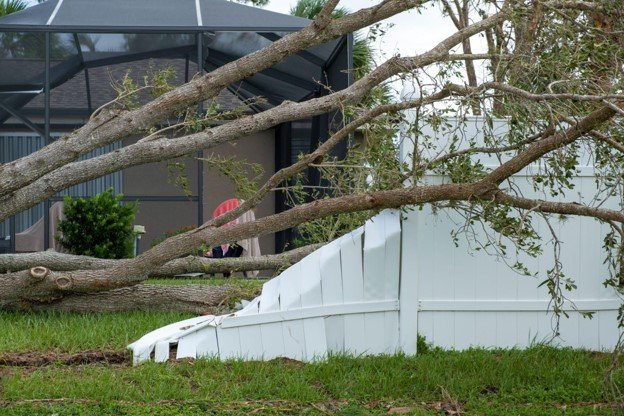
Much of Streetsboro sits on soil that retains massive amounts of water. During a wet spring or a sudden thaw, the ground becomes “plastic.” This means it loses its structural grip on the root plate. When high winds hit a large Oak or Maple in saturated clay, the entire tree can tip over because the soil simply cannot hold the roots in place.
2. The freeze-thaw cycle
Rapid temperature swings, common in Ohio, cause the wood of the tree to expand and contract at different rates than the bark. This leads to “frost cracks,” which are deep vertical splits. These cracks are often the entry point for wood-decaying fungi that eat the tree from the inside out.
Five critical signs of immediate tree failure
If you notice any of the following, you should contact an expert for emergency tree service in Streetsboro immediately.
1. The “death flare”: Fungal growth at the base
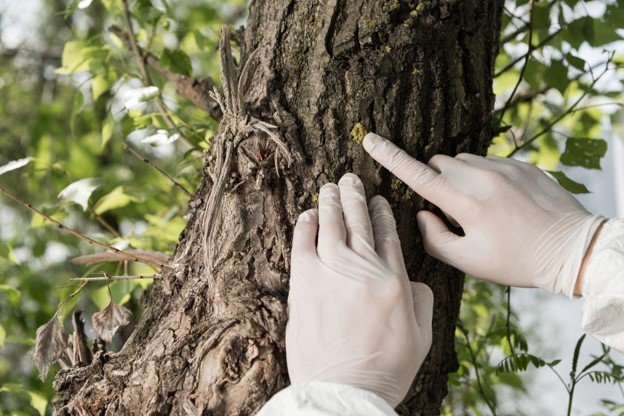
If you see mushrooms, “conks,” or shelf-like fungi growing at the base of your tree or on the exposed roots, the tree is likely rotting. Fungi are the reproductive organs of rot; by the time you see the mushroom, the internal structural cellulose of the tree has often already been consumed. This is particularly dangerous because the canopy may still look green and healthy while the “anchor” of the tree is turning into mush.
2. Soil heaving and “the new lean.”
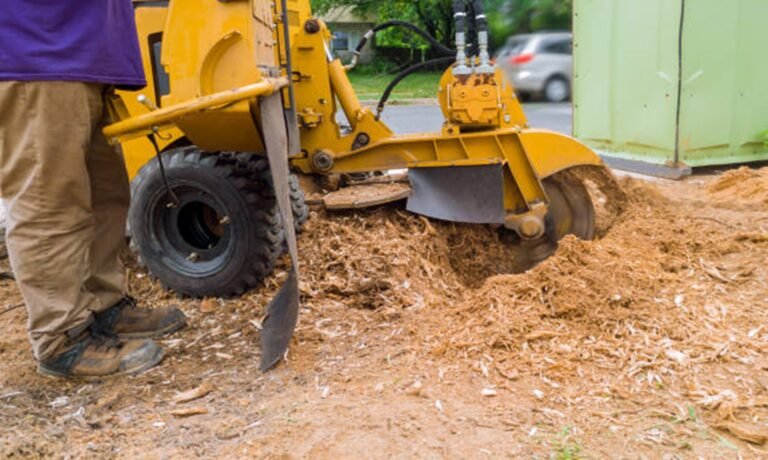
A tree that has grown at a slight angle for 20 years is usually safe; it has grown “tension wood” to compensate. However, if a tree develops a sudden lean after a storm, check the ground on the opposite side. If the soil is cracked, mounded, or “heaving,” the roots have snapped or detached. This tree is no longer anchored and is a primary candidate for tree removal in Streetsboro.
3. Co-dominant stems (The “V” crotch)
Trees with two main trunks of similar size that form a tight “V” shape are structurally weak. As the trunks grow in diameter, they begin to push against each other. This creates “included bark,” where the two stems aren’t actually fused together. In a high-wind event or under heavy ice, these trunks act like a wedge, splitting the tree down the middle.
4. Deadwood and “widow-makers.”
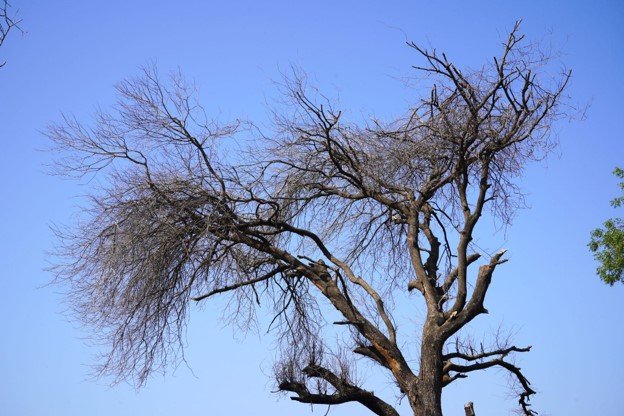
Large, leafless branches in the upper canopy are known as “widow-makers” because they can fall without warning, even on a calm day. If more than 25% of the canopy is dead or “thinning,” the tree is in a state of terminal decline. These branches should be removed during regular tree trimming and pruning in Streetsboro to prevent property damage.
5. Deep vertical trunk cracks
A crack that goes through the bark and deep into the wood, especially if there are two cracks on opposite sides of the tree, indicates that the trunk is failing. This is often a sign of “internal shear,” where the tree can no longer support its own weight.
Identifying hidden decay: The arborist’s perspective
Not all signs of failure are visible to the naked eye from the ground. This is where the expertise of Streetsboro Tree Service becomes vital.
Cavities and hollows
While a hollow tree can survive for years, its structural integrity depends on the thickness of the “residual shell” of healthy wood. An arborist uses specialized tools to determine if the shell is thick enough to support the canopy or if the tree is a “hollow pipe” ready to buckle.
Cankers and bark loss
Cankers are localized areas of dead bark on branches or trunks. They are often caused by fungi or bacteria. If a canker encompasses more than half of a branch’s circumference, that branch is likely to snap. If it’s on the main trunk, the entire tree’s nutrient delivery system is compromised.
Seasonal failure risks in Northeast Ohio
The “job” of a tree changes with the seasons, and so do the failure points.
- Spring: Saturated soils and “wind throw” are the primary concerns.
- Summer: “Summer branch drop” occurs when heat-stressed trees unexpectedly shed large, healthy-looking limbs to conserve water.
- Autumn: Decaying leaves can hide fungal “conks” at the base of the tree.
- Winter: Snow and ice loading put maximum weight on “V” crotches and horizontal limbs.
Immediate steps to take if you suspect a hazard
If you are standing in your yard looking up at a leaning or cracked tree, follow these steps:
- Keep your distance: A falling tree can “barber chair” (split vertically and kick out at the base) or bounce, hitting targets further away than you might expect.
- Identify targets: Is the tree leaning toward the house, a power line, or a public sidewalk? This determines the “priority level” for the crew.
- Do not attempt DIY removal: Hazardous trees are unpredictable. Cutting a “loaded” branch (one under tension) can cause the trunk to snap or the branch to whip back with lethal force.
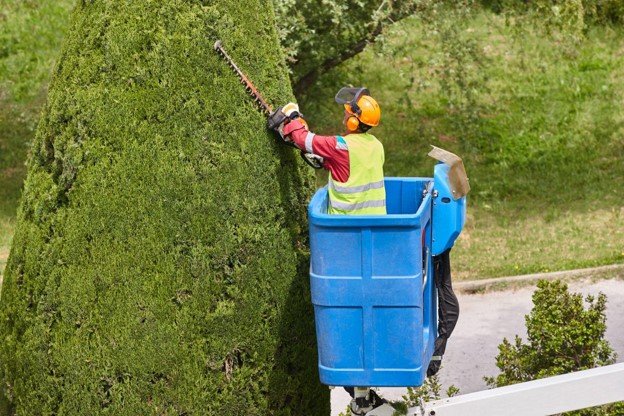
- Call for an assessment: A professional can often save a tree through “cabling and bracing” if the decay hasn’t progressed too far. If not, they can perform a safe tree removal using rigging and bucket trucks to protect your lawn.
The “Duty of Care”: Legal and insurance implications
In Streetsboro, as in the rest of Ohio, homeowners have a “duty of care” to maintain their property.
- Acts of God: If a perfectly healthy tree falls during a tornado, it is generally considered an “Act of God,” and your insurance covers the damage to your home.
- Negligence: If a tree has had a visible, six-inch crack or a giant mushroom at the base for three years and it finally falls on your neighbor’s roof, you (or your insurance) may be held liable.
Documenting regular inspections and maintenance from a professional service is your best defense against liability claims. It proves you were not negligent.
Conclusion: Protecting your Streetsboro property
Your trees are your property’s most valuable natural assets, providing shade, beauty, and privacy. However, a “failed” tree quickly turns from an asset into a massive financial and safety liability.
By learning to spot the “Death Flare,” the “New Lean,” and the “V-Crotch,” you can take action while the situation is still manageable. Don’t wait for a storm to tell you which trees are weak.
Summary of warning signs:
- Fungus or mushrooms at the base or on the roots.
- Sudden leaning or mounded soil.
- Tight “V” shaped trunks with included bark.
- Large dead branches in the upper canopy.
- Deep cracks that penetrate the wood of the trunk.
Next step for you
Think one of your trees might be showing these signs? Contact us for a free hazard assessment in Streetsboro. We’ll help you determine if your tree needs a simple “haircut” or if it’s time for it to go.